Advancing UNM through the next 10 years: new challenges, new leaders

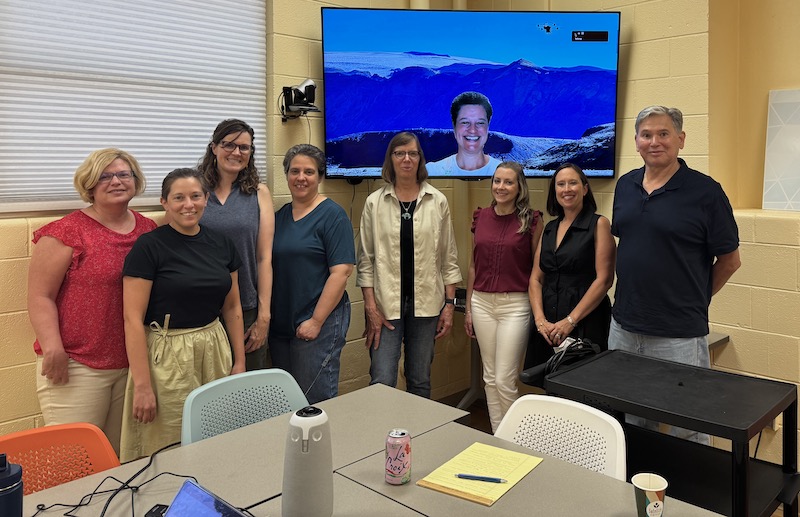
Worries ahead over research funding struggles, faculty freedom
In the spring of 2025, it was clear across academia that President Donald Trump’s election meant big changes in grant funding and research across the board.
Executive orders set new and confusing rules that changed the direction of federal agencies that faculty rely on for research funding. Some orders slashing agency budgets were put in place and later changed by the administration or by orders from the courts.
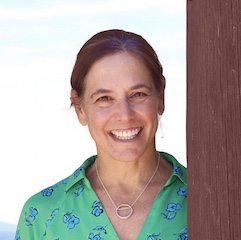
UNM Vice President for Research Ellen Fisher said the situation was overwhelming at times.
“I woke up one Saturday morning and realized it was challenging to even think about getting out of bed. Then I thought ‘What can I do?’ and I decided that the one thing I felt confident I could continue to do, was that I could continue to show up; continue to be there; continue to do my job as best I could. And that’s exactly what everyone on my team did as well.”
Fisher redoubled her office’s efforts to track the changes at the federal level, to inform faculty about them and to help them respond.
ADVANCE, which long had partnered with the OVPR and the Faculty Research Development Office, collaborated again on a new series of workshops meant to help researchers find new sources of money, called Diversifying Your Research Funding. Throughout the spring and summer of 2025, faculty heard from leaders about ways to work with non-profits, state government and beyond. The communication team launched a webpage for the workshop replays and other resources. Internal analytics show those videos were some of the most popular from the project’s 10 years.
Faculty Research Development Office Assistant Director of Research Strategy and Programming Hannah Yohalem said her usually optimistic team, which helps faculty with advice and support on research funding, “felt a heavy weight” but tried to assure faculty they were doing whatever they could to support them.
“The changes at the federal level were destabilizing and the pace of that change made us feel like we were caught flat-footed, forcing a reactive rather than proactive response. In many ways, we could no longer rely on the best practices we’ve used for years,” she said.
As the flurry of funding cuts continued for months, faculty across campus were feeling stressed.
“We were hearing concerns about academic freedom, impacts on promotion and tenure, and the loss of funding, particularly for fields that the new federal administration deprioritized or rejected,” Yohalem said.
“When federal funding rules and expectations are moving under your feet, it’s hard for faculty to decide what to do next. Projects like the Diversifying Your Research Funding workshops and resources not only named what people were feeling, they helped faculty move from uncertainty to a structured strategy, with concrete examples of non-federal funding routes and how to pursue them.”
Ongoing, frequent communication to faculty
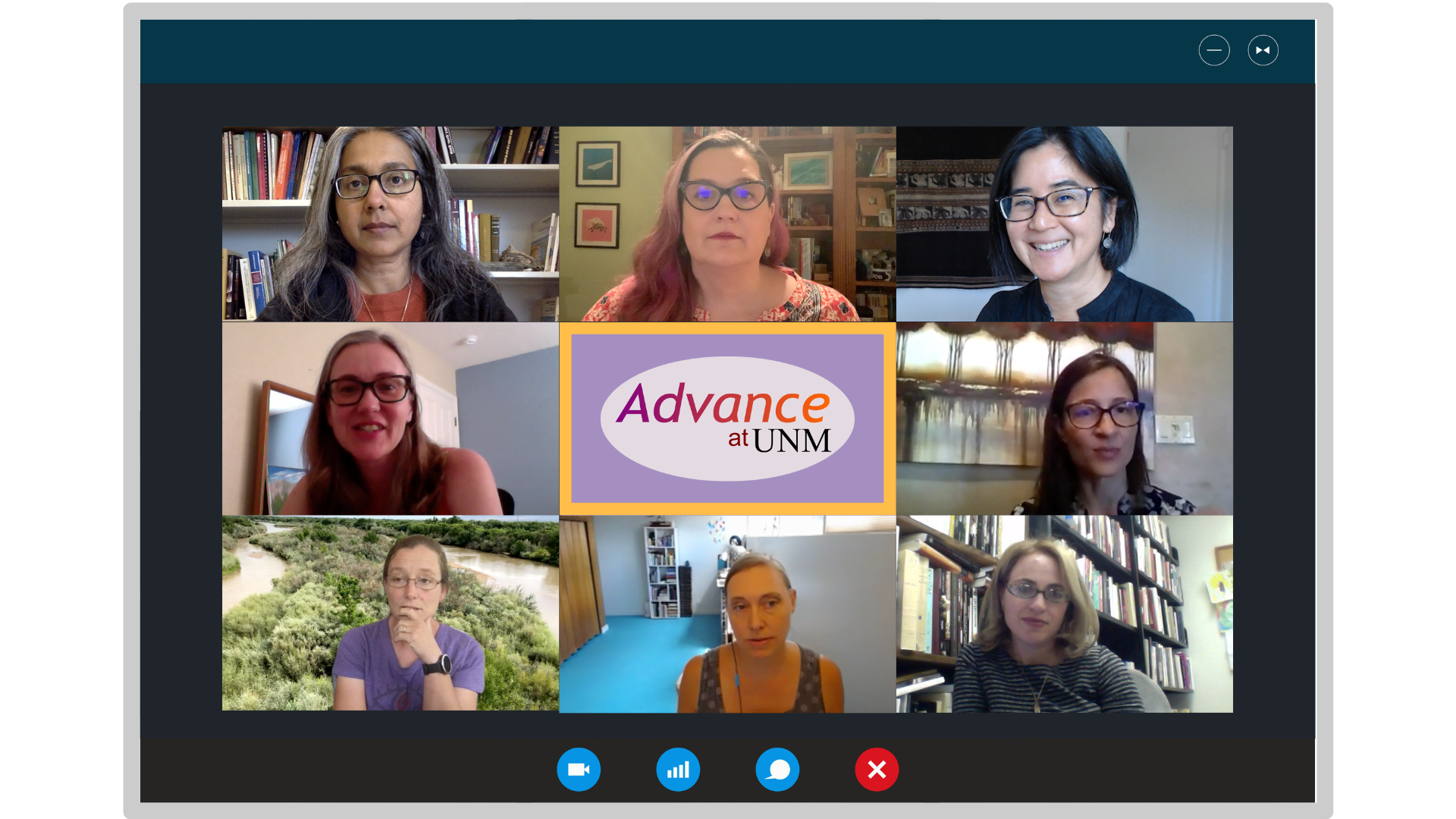
The webpage on diversifying funding was just one way the communication team, now a decade old, would continue to be integral to the project and work with on campus partners who were also communicating with faculty.
As Fisher’s office crafted weekly messages along with Hengameh Raissy, UNM Health Sciences Center Vice President for Research about federal actions, for example, ADVANCE helped amplify those on its own website and weekly emails. The aim was to reach faculty with important information in as many ways as possible.
“One of the biggest efforts we had was around open lines of communication – this is something that I have always been known for, but in 2025, it became imperative. Even when the news was bad, we kept working to communicate with everyone across campus, with a no-nonsense but compassionate tone (with a touch of humor always at the ready), regardless of who we were dealing with.”
ADVANCE’s communication arm was created and led by leadership team member Kate Cunningham, who oversaw 10 multimedia communication interns throughout the years. The group’s work included creating ADVANCE’s website where, among other things, it has posted guides to faculty well-being and health resources, to faculty writing resources, and to student support services.
The team also produced multimedia projects to highlight the successes of faculty, including profiles of the winners of the Women in STEM Awards that ADVANCE hosted with the UNM Office of Academic Affairs and the Office of the Vice President for Research for nine years.
Along the way, the team also created a wide variety of stories for the ADVANCE website, including on the work of a professor expanding the number of CT scans available for identifications of deceased people; researchers blending computational designs with traditional crafts; a study of the way resources are managed in 5G networks and cyber-physical systems, a professor leading a large grant to look at health impacts of climate change and a psychiatrist revamping the state’s behavioral health system.
“Having a website that was so quickly updated was crucial. And the variety and quality of imaginative and professional stories, videos and faculty guides the communication team produced over the years was phenomenal.”
A new faculty touchpoint survey
In Spring 2025, ADVANCE’s research arm launched a brief “touchpoint” faculty survey, and nearly 40 percent of main campus full time faculty participated.
The results found that UNM faculty remained committed to teaching, scholarship and colleagues.
Faculty reported the extent to which “recent events” in spring 2025 during the new presidential term affected them in various domains. The five areas in which faculty were most negatively affected were: obtaining funding/grants, recruiting graduate students, academic freedom, retirement plans, and scholarship.
The survey also found that, compared to 2023, faculty reported worse psychological well-being, more difficulty concentrating and more concerns about tenure and/or promotion.
Through qualitative analyses of open-ended questions, Naila de-Cruz-Dixon, a UNM doctoral student in clinical psychology, identified five themes (including threats to institutions of higher education, navigating new barriers to scholarship, and increasing workloads) through which faculty provided richer information about their concerns. Faculty descriptions of their experiences, as well as suggestions for addressing them, ultimately prompted ADVANCE to make new recommendations for support.
Marchiondo said all of the recommendations address funding concerns in some manner (i.e, administrators should routinely communicate federal funding changes, help faculty identify new sources of funding, reconsider evaluation criteria for faculty).
Concerns about research funding remain for many faculty, Fisher said, noting that dealing with federal actions still feels monumental.
“Changes keep coming and perhaps the most frustrating piece right now is that all of our major funding agencies have really slowed the pace at which they are making awards. That’s still an issue, even though it’s not necessarily making the news,” Fisher said.
Chances to reflect
Both ADVANCE leaders and faculty who have benefitted from the program are using the anniversary as an opportunity to sing its praises.
“UNM is a more fair institution now. Evaluations are more equitable. Contributions are celebrated more visibly,” Moses said. “There’s a culture of basic respect and fairness that ADVANCE helped shape.”
Cori Meyers, an associate professor of Earth and Planetary Sciences, said ADVANCE was crucial to her career at UNM.
“This program has saved my life. I’m not sure I would have stayed in academia or made it through the tenure hurtle without the support (both group and individual) that I received from ADVANCE. I wish every university could have something like this.”
Rodríguez said ADVANCE’s work has embedded equity and faculty support into the core of how UNM operates and “moved important conversations about recruitment, mentoring, and advancement to institutional practice.”
“UNM is more intentional and transparent today. The shift has been cultural as much as procedural — from expecting individuals to navigate systems on their own to strengthening the systems themselves,” she said.
UNM President Garnett Stokes said she’s proud of the program for expanding opportunity, strengthening equity, and advancing excellence across the academic community.
“Over the past decade, ADVANCE has become a trusted hub for faculty — supporting promotion and tenure, enhancing research and professional development, and creating a safe, confidential space for guidance and connection,” she said. “Through data-informed leadership, collaborative partnerships, and a steadfast commitment to faculty success, the program has helped shape a more inclusive, supportive, and thriving environment where all scholars can achieve their fullest potential.”
Apart from making a name for itself at UNM, ADVANCE stands out nationally, said Abby Stewart, the former director of the University of Michigan ADVANCE Program and a professor of psychology and women’s and gender studies.
“ADVANCE at UNM has been unusually successful at offering frequent, accessible, empathic and humorous communication to the entire campus community. It is exceptional in the consistency and success of its communications strategy,” she said.
“It has also been (as many programs have been) dedicated to identifying and giving attention to exciting work that women scientists on campus are doing that might otherwise be overlooked. Again, though this has been a goal of many ADVANCE programs, UNM’s program has been more strategic and successful at meeting this goal than most.”
Stewart, a well known scholar on diversity in academia, also said the UNM program joins a small number of ADVANCE grants that continued past their NSF funding.
“ADVANCE at UNM was focused on institutionalization from the beginning and earned a place on campus as a source of reliable information, support and advice,” she said.
“That fact made it possible for the program to matter both to individual faculty struggling with career issues and institutional leaders striving to improve the environment for faculty on campus. Institutionalization is a natural step once you are valued by both of those constituencies as ADVANCE at UNM is.”
The next ten years
The next decade for ADVANCE is already starting to take shape, including an upcoming change in its leadership.
Fulghum announced in 2025 she would be retiring in 2026.
A chemistry professor who spent 37 years as a faculty member, Fulghum spent 24 years at UNM, 23 of which were in various leadership positions including as chair of the former Chemical and Nuclear Engineering Department in the School of Engineering, vice president for research, and associate dean for faculty in the College of Arts and Sciences.
Fulghum said her work at ADVANCE “has been some of the most deeply satisfying, most fun, and hardest work I’ve done in my faculty career.”
“Together with collaborators across campus, we work to support faculty in having enjoyable and productive careers. Our efforts are developed based on campus data and experiences, and we pivot as events indicate different types of support are needed,” Fulghum said.
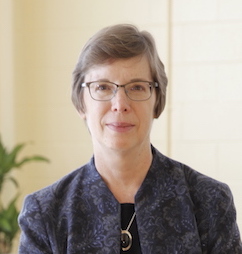
Lisa Broidy, a distinguished professor and chair of the Sociology and Criminology Department, will succeed Fulghum in July 2026.
Broidy said she’s excited for the opportunity to continue ADVANCE’s work to support and mentor faculty at all stages of their academic career.
“I look forward to getting to know faculty across campus and helping them access the support they need to reach key career milestones, either through ADVANCE or in partnership with other units across campus. I also really appreciate (and will not lose sight of) ADVANCE’s long-standing recognition that work-life balance is a central component of faculty success.”
Broidy is also looking ahead to working with the array of educators who make UNM unique.
“I also really enjoy one-on-one mentoring and look forward to being a resource for, and building relationships with, the diverse group of faculty who contribute to UNM’s mission in so many unique and important ways,” she said.